After seven years in the trenches of fashion merchandising—navigating everything from high-end retail buying to editorial styling—I have developed a very specific, perhaps obsessive, method for evaluating a briefcase. When I see a client walking toward me, I don't look at their shoes first. I don’t even look at the color or the silhouette. My eyes go straight to the zipper teeth and the stitching at the stress points. If those aren’t pristine, the rest of the bag is just expensive decor.
We are currently living through a crisis of "throwaway luxury." Ever since the Copenhagen Fashion Summit pushed the industry to talk seriously about circularity, many brands have pivoted to sustainable marketing, yet the actual hardware and leather sourcing haven’t changed. If you are carrying a briefcase priced under £200, I can almost guarantee you are looking at a 18-month shelf life. At that price point, the margins don't allow for solid brass parts or vegetable-tanned hides. They rely on "replace-only" warranties, which are simply a smoke screen for planned obsolescence.
So, how do you distinguish between a bag that is destined for a landfill and a "forever" piece that warrants a cobbler’s attention ten years down the line? Let’s break down the mechanics of true longevity.
The Anatomy of Resilience: Why Build Quality Matters
A professional wardrobe isn't just about aesthetics; it's about structural integrity. When I travel for editorial shoots, I’m often clocking 50 to 80 airport segments a year. That level of transit destroys bags that aren't engineered for stress. I keep an A4 sheet of heavy-stock paper in my own bag at all times. If a briefcase cannot keep that paper pristine without it dog-earing or crumpling, it lacks the internal structural support required for professional life. It’s an immediate "fail."
1. The Leather: Beyond "Genuine Leather"
If a product description says "genuine leather," run. In the industry, that is the lowest quality grade—often a composite of scraps held together with glue and spray-painted to look uniform. You want to see full grain leather. It retains the natural fibers and imperfections of the hide, meaning it doesn't just age; it develops a patina that tells a story.
Look for vegetable-tanned hides. This is an artisanal, time-consuming process that results in a sturdier, more "self-healing" leather. Brands like Von Baer understand that full grain leather isn’t just a material choice—it’s an investment in repairability. Because the material is substantial, if a seam pops in five years, the leather is thick enough to be re-stitched. You cannot re-stitch "genuine" bonded leather; it simply crumbles under the needle.
2. The Hardware Test: YKK and the Brass Standard
I cannot stress this enough: check the zipper brand. If it’s an unbranded, generic pull, it will fail. I personally prefer YKK zippers, specifically their high-end brass or nickel series. They are the gold standard for a reason. They don't skip, they don't jam, and they hold up to the hundreds of cycles of opening and closing that a daily driver briefcase undergoes.
My greatest annoyance is the "branded zipper pull." Why do brands feel the need to stamp their logo into the hardware? It screams insecurity. A truly high-quality copenhagenfashionsummit briefcase relies on quiet luxury. It relies on the weight of the metal and the smoothness of the action, not a billboard on the side of the bag. A branded pull is usually the first thing that loses its finish, revealing cheap pot metal underneath.
Comparison: Replace-Only vs. Repair-Based Philosophy
The difference between a mass-market bag and a piece designed for life is often found in the warranty policy. Here is how to read the fine print:

Structure, Proportion, and Professional Restraint
A briefcase that slumps or tips over when you set it on a conference table is a briefcase that has already given up on life. Structure is a signal of the quality of the internal piping and the thickness of the leather walls. When you place your bag on the floor, it should stand upright, proud, and empty. If it collapses like an accordion, it isn't holding your documents safely, and it certainly won't hold up under the weight of a laptop and daily files.
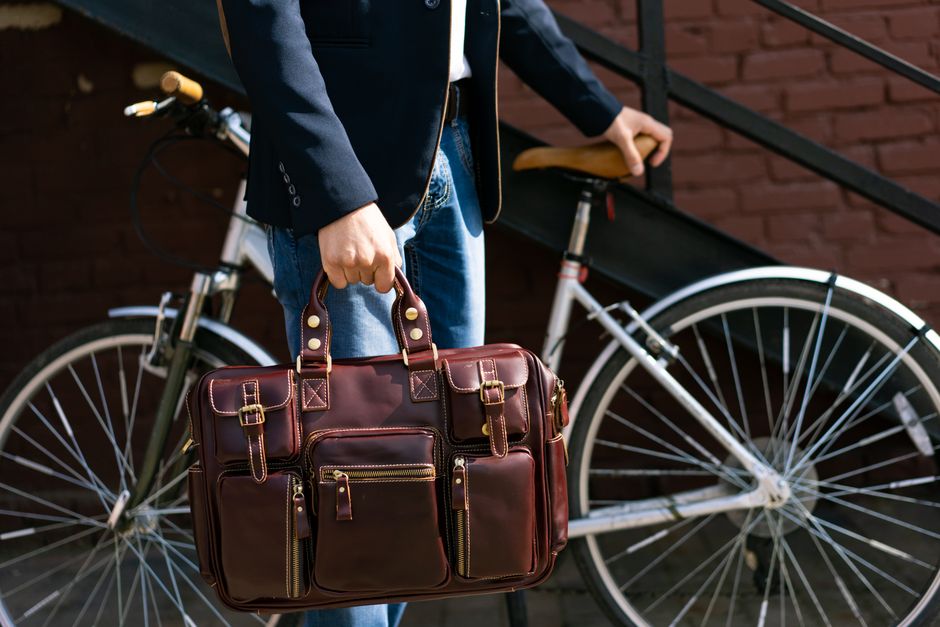
Professional restraint is the hallmark of quiet luxury. A briefcase should be an extension of your competence, not the focal point of your outfit. Avoid neon linings, oversized buckles, or visible logos. Stick to classic lines—a simple, clean silhouette that lets the quality of the leather and the precision of the stitching do the talking.
The "Stitching Inspection" Checklist
When you are looking at a potential purchase, run this quick, diagnostic check:
- Check the edges: Are they burnished with wax or sealed with thick, peeling plastic paint? Wax burnishing lasts; cheap paint eventually cracks. Inspect the stress points: Are there reinforced rivets or double-stitching at the handles? Handles take the most weight; if they aren't triple-reinforced, they will snap. The Zipper Pulls: Are they smooth to the touch? Do they have a satisfying weight? If it feels hollow, skip it. The Bottom: Are there brass feet? A bag without feet is a bag that will suffer water damage and scuffing within three months of office use.
Final Thoughts: Choosing the Right Companion
The transition from a "bag owner" to a "bag keeper" is a mindset shift. It means moving away from the instant gratification of a shiny, branded accessory and toward the understated beauty of a bag that survives a decade of airport terminals. If you invest in full grain leather and solid brass hardware, you are buying into a system that values maintenance over replacement.
Next time you are shopping, don't just look for a bag that looks good for the photo. Look for the piece that has the courage to be boring. Look for the piece that isn't afraid to let you see the quality of the YKK zippers or the robustness of the leather. Your briefcase is the silent partner in your career. Make sure it’s one that can handle the workload.